+98 912 272 2656 info@persiatrek.com
Iran ski tours

Iran ski tours

Discover the Ultimate Winter Adventure: Iran Ski Tours

Iran, with its dramatic landscapes and diverse topography, has become a surprising yet thrilling destination for ski enthusiasts worldwide. From the towering peaks of the Alborz Mountains to the cozy ski resorts nestled in picturesque valleys, Iran offers an unparalleled skiing experience. An Iran ski tours combines pristine slopes, untouched powder for ski touring, and vibrant local culture, creating an adventure that’s as enriching as it is exhilarating.
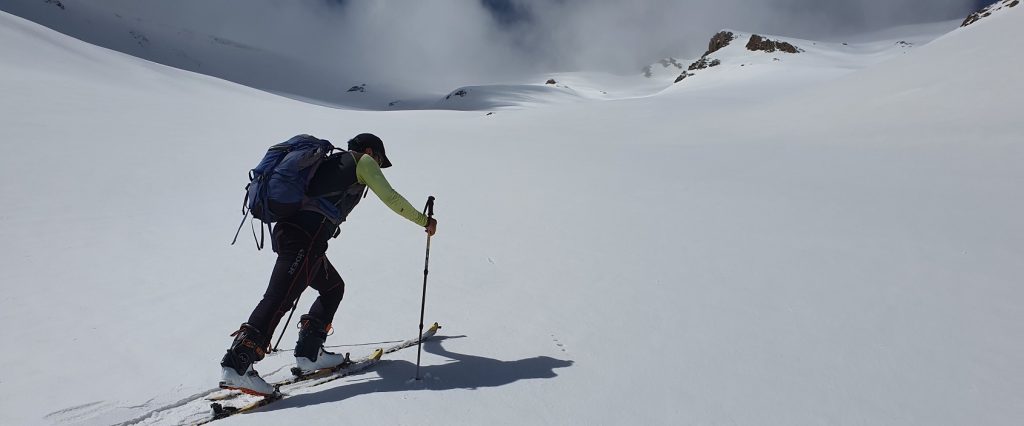
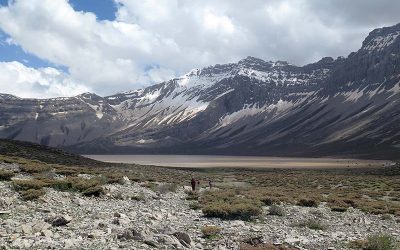
damavand ski tour

Why Choose an Iran Ski Tours?

  1. World-Class Ski Resorts

Iran is home to several ski resorts with high-altitude slopes, modern facilities, and a variety of terrains suitable for all skill levels. Resorts like Dizin, Shemshak, and Darbandsar are among the best in the Middle East, offering high-quality snow and excellent infrastructure.

  1. Exceptional Ski Touring Opportunities

For those seeking off-piste adventures, Iran’s rugged mountain ranges, such as the Alborz and Zagros, provide endless opportunities for ski touring. With untouched powder and breathtaking views, these areas are perfect for experienced skiers looking for unique challenges.

  1. Affordable Luxury

Iran ski tours are highly affordable compared to European or North American destinations. Travelers can enjoy world-class experiences at a fraction of the cost, making it an excellent choice for those seeking value without compromising quality.

  1. Rich Culture and Hospitality

An Iran ski tour isn’t just about skiing. It’s also an opportunity to immerse yourself in the country’s rich history, vibrant culture, and the legendary hospitality of its people.

Best Ski Resorts in Iran
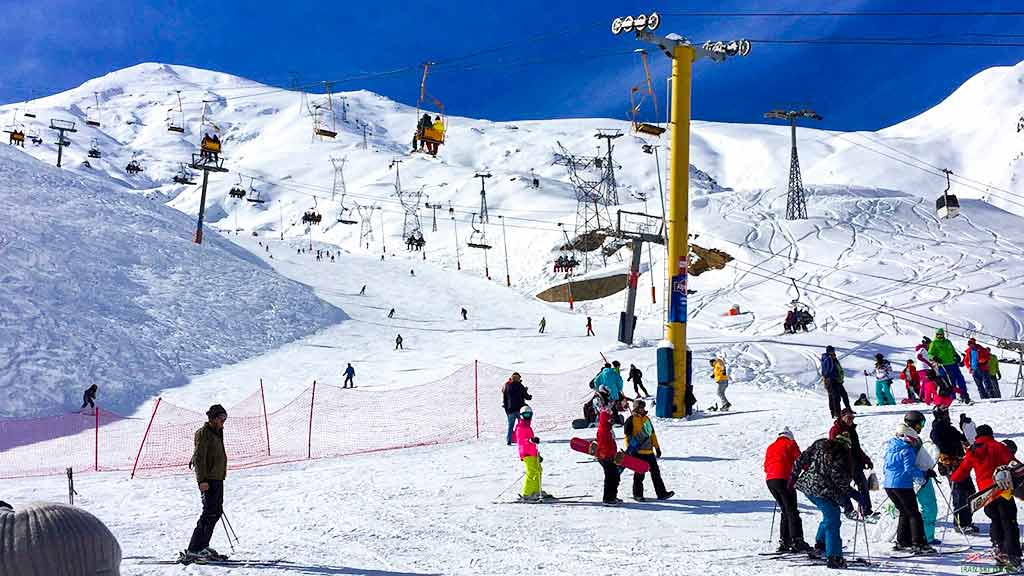
  1. Dizin Ski Resort

Altitude: 2,650m – 3,600m
Location: Alborz Mountains, 70 km from Tehran

Dizin is the largest and most popular ski resort in Iran. Recognized internationally by the FIS (Fédération Internationale de Ski), it boasts:

  • Extensive terrain: Perfect for both beginners and advanced skiers.
  • Modern facilities: Including chairlifts, gondolas, and well-maintained slopes.
  • Family-friendly environment: With ski schools and beginner-friendly zones.
  1. Shemshak Ski Resort

Altitude: 2,550m – 3,050m
Location: Alborz Mountains, 57 km from Tehran

Shemshak is known for its steeper slopes, making it ideal for experienced skiers. The resort offers:

  • Challenging runs for advanced skiers.
  • Night skiing: A unique experience under bright floodlights.
  • Traditional atmosphere: Cozy accommodations with stunning views.
  1. Darbandsar Ski Resort

Altitude: 2,600m – 3,500m
Location: Near Shemshak, 60 km from Tehran

This smaller resort is a favorite among locals and offers:

  • A quieter, less crowded skiing experience.
  • Excellent off-piste skiing opportunities.
  • Proximity to other resorts, allowing for combined ski adventures.
  1. Tochal Ski Resort

Altitude: 3,850m
Location: North Tehran

Located within the capital, Tochal offers one of the highest ski lifts in the world. Highlights include:

  • Easy access from Tehran.
  • Panoramic views of the city and surrounding mountains.
  • Year-round skiing thanks to its altitude.
  1. Pooladkaf Ski Resort

Altitude: 2,850m
Location: Zagros Mountains, near Shiraz

For a southern skiing experience, Pooladkaf offers a mix of skiing and cultural exploration. Its proximity to Shiraz makes it a perfect blend of adventure and sightseeing.

Fore more information about Iran ski resorts you can read this article

Ski Touring in Iran: A True Adventure

  1. Alborz Mountains

The Alborz range, home to Mount Damavand, offers incredible ski touring opportunities. Key highlights include:

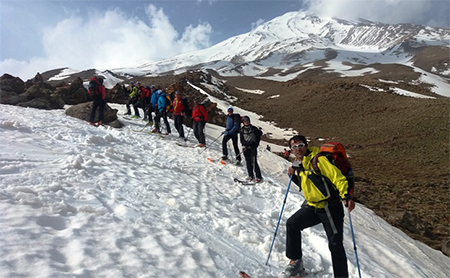
  • Mount Damavand: Without a doubt, one of the most popular peaks for mountain skiing is Mount Damavand.  As the highest peak in the Middle East (5,610m), it’s a bucket-list destination for ski tourers. The ascent combines challenging climbs with thrilling descents on untouched powder. see here a mount Damavand ski tour
  • Doberar ( Lasem) Valley: Lasem Valley is one of the most popular mountainous areas near Tehran for mountain skiing, with several peaks above 4,000 meters. Also, due to its proximity to Mount Damavand, this valley is the best option for those who plan to ski to Mount Damavand.s.
  • Alam-kuh region : The Alam-Kuh region is known as the Iranian Alps because of its lush, forested slopes and tall, needle-shaped mountains.Although the northern face of Alamkooh Peak is famous among climbers for its fearsome and tall wall, its southern face is a vast and rugged plain called Hesarchal, surrounded by 4,000-meter peaks and a paradise for mountain ski lovers.
  • Alamut Valley : Although Alamut Valley is not very famous among skiers, it is one of the best mountain ski areas, which includes 4,000-meter-high peaks, and in this area you can find pristine and untouched trails that are ideal for mountain skiing.
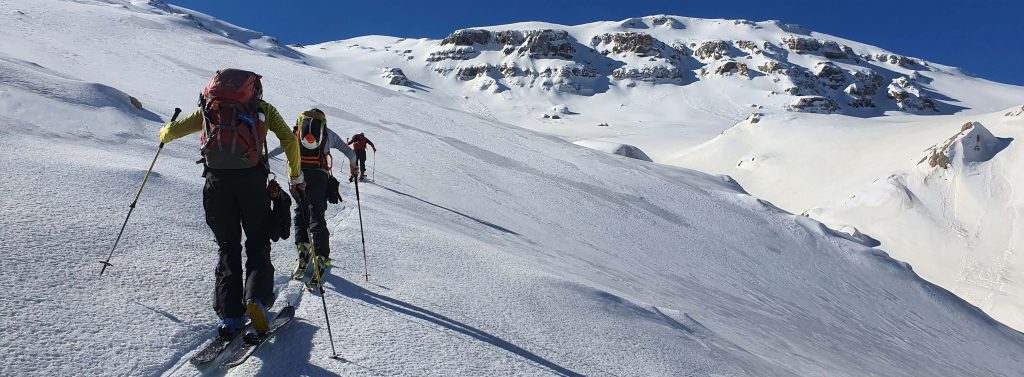
  1. Zagros Mountains

The Zagros mountain range, with about 600 peaks above 4,000 meters, most of which are covered with snow from December to April, is a suitable place for mountain skiing. One of the most popular areas of the Zagros is the Chelgerd and Zardkouh Bakhtiari region, which is a suitable place for mountain skiing in the months of February and March.

Features include:

  • Untouched snow: Ideal for those seeking solitude and pristine terrain.
  • Traditional villages: Providing cultural interactions and unique overnight stays.
  1. Sabalan Mountain

Located in northwest Iran, Mount Sabalan (4,811m) is another favorite for ski touring. It offers:

  • Natural hot springs: Perfect for relaxation after a long day on the slopes.
  • Spectacular views: From its volcanic summit crater.

Iran Ski Tour Itinerary

Here’s a sample itinerary to help you envision your ski adventure:

Day 1: Arrival in Tehran

  • Transfer to your hotel.
  • Explore Tehran’s highlights, such as the Golestan Palace or Tehran Grand Bazaar.

Day 2: Transfer to Dizin Ski Resort

  • Morning drive to Dizin (2 hours).
  • Full-day skiing.

Day 3: Skiing at Dizin

  • Enjoy Dizin’s extensive slopes and facilities.
  • Evening relaxation in a local chalet.

Day 4: Ski Touring in Mount Damavand

  • Transfer to Polur Village, the gateway to Damavand.
  • Begin a multi-day ski touring adventure.

Day 5: Ski Touring and Ascent of Damavand

  • Climb higher slopes of Damavand.
  • Experience thrilling descents through untouched snow.

Day 6: Return to Tehran

  • Relax and reflect on your adventure.
  • Optional city tour or shopping.

Day 7: Departure

  • Transfer to the airport for your flight home.

Tips for a Successful Iran Ski Tour

  1. Pack Wisely: Include warm, layered clothing, quality ski gear, and essential safety equipment like avalanche transceivers for ski touring.
  2. Stay Hydrated: High-altitude skiing can cause dehydration, so drink plenty of water.
  3. Hire Local Guides: They provide valuable insights and ensure safety during ski touring.
  4. Acclimatize Properly: Spend a day or two adjusting to higher altitudes before skiing.
  5. Respect Local Customs: Iran is a culturally rich country with specific dress codes and customs; adhering to them will enhance your experience.

IRAN CULTURE

Combining Skiing with Cultural Exploration

An Iran ski tour is more than just skiing. Use your trip to explore Iran’s rich history and cultural treasures:

  • Tehran: Visit the National Museum or Milad Tower.
  • Shiraz: Discover Persepolis and the poetry of Hafez.
  • Isfahan: Admire the stunning architecture of Naqsh-e Jahan Square.

Why Iran is Emerging as a Global Ski Destination

Iran’s diverse terrain, high-altitude mountains, and untouched powder snow are attracting international ski enthusiasts. The country’s commitment to improving its ski infrastructure and promoting sustainable tourism ensures it will remain a sought-after destination for years to come.

Conclusion: Plan Your Iran Ski Tour Today

An Iran ski tour offers a rare blend of adventure, culture, and affordability. Whether you prefer the well-groomed slopes of Dizin, the challenging terrains of Shemshak, or the thrill of ski touring on Mount Damavand, Iran promises an unforgettable experience.

Pack your skis and get ready to explore this hidden gem of winter sports. Iran awaits with open arms and snow-covered peaks ready to be conquered.

 

Discover the Beauty of an Iran cycling tours

Discover the Beauty of an Iran cycling tours

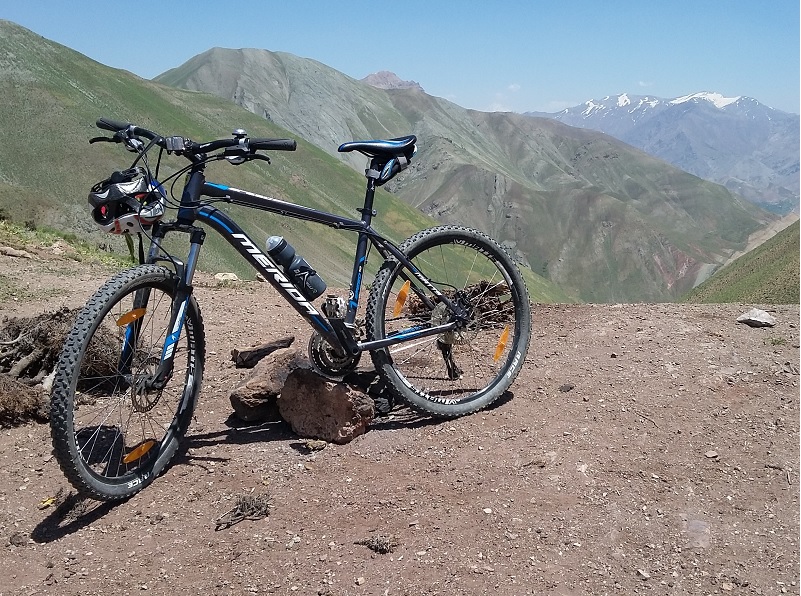
Discover the Beauty of Iran Cycling Tours : A Journey Through Nature, Culture, and Adventure

Iran is a land of stunning contrasts, where ancient history meets breathtaking landscapes, and warm hospitality blends with cultural diversity. One of the best ways to explore this enchanting country is through Iran cycling tours. From the towering peaks of the Alborz and Zagros Mountains to the serene Caspian coast and the stark beauty of its deserts, Iran offers cyclists an unforgettable journey filled with adventure and discovery.

cycling tour in Iran

Why Choose Iran Cycling Tours?

Cycling through Iran is not just about the destination; it’s about the journey. With its diverse terrain, ranging from mountain trails to forested paths and desert highways, Iran caters to cyclists of all levels. Iran cycling tours allow travelers to experience the country up close, connecting with local communities and immersing themselves in the vibrant culture.

Key reasons to consider an Iran cycling tour:

  • Diverse Landscapes: From lush forests in the north to arid deserts in the south, every pedal stroke unveils a new scene.
  • Cultural Immersion: Cycling through villages and towns offers a unique opportunity to interact with locals, enjoy authentic Persian cuisine, and experience traditional lifestyles.
  • Historical Richness: Iran is home to UNESCO World Heritage Sites, ancient ruins, and architectural marvels that dot the cycling routes.
  • Adventure and Fitness: A cycling tour in Iran challenges your endurance while rewarding you with scenic vistas and a sense of accomplishment.

Top Cycling Routes in Iran

iran cycling

  1. The Alborz Traverse

This iconic route takes cyclists through the majestic Alborz Mountains, connecting Tehran to the Caspian Sea. It’s a 900-kilometer journey that showcases Iran’s rich natural beauty.

Highlights:

  • Pass through Lar National Park with its pristine alpine scenery.
  • Ride around Mount Damavand, the highest volcano in Asia.
  • End your journey at the lush, coastal region of the Caspian Sea.

The Alborz Traverse is ideal for cyclists seeking a mix of challenging climbs, rugged terrain, and rewarding landscapes.

  1. The Zagros Mountain Trails

For adventure enthusiasts, the Zagros Mountains in western Iran provide an exhilarating cycling experience. This region is known for its dramatic cliffs, green valleys, and traditional nomadic people.

Highlights:

  • Cycle through the Kurdistan region, known for its vibrant culture and friendly locals.
  • Visit the historical city of Shiraz, home to the Persepolis ruins.
  • Explore the untouched beauty of Chahar Mahal and Bakhtiari Province, a haven for nature lovers.
  1. The Dasht-e Kavir Desert Circuit

For those who crave the extraordinary, cycling across Iran’s central desert, Dasht-e Kavir, offers a unique adventure. The vast sandscapes, salt flats, and dramatic sunsets create a surreal experience.

Highlights:

  • Ride along ancient caravan routes.
  • Experience the tranquility of Maranjab Desert and its star-filled skies.
  • Visit the oasis town of Kashan, renowned for its traditional Persian architecture.
  1. Caspian Sea Coastal Ride

This route along the northern coast is perfect for cyclists who prefer a more relaxed journey. The humidity from the Caspian Sea creates a lush, green environment that contrasts with the arid landscapes found elsewhere in Iran.

Highlights:

  • Pass through the Hyrcanian forests, a UNESCO World Heritage Site.
  • Enjoy fresh seafood and explore charming coastal villages.
  • Cycle through vibrant towns like Ramsar and Bandar-e Anzali.

Practical Tips for an Iran Cycling Tour

  1. Best Time to Visit
    The ideal time for an Iran cycling tour depends on the region. For most routes, spring (March to May) and autumn (September to November) offer the best weather conditions. The northern regions near the Caspian Sea are lush and cool, while the deserts are more tolerable during these seasons.
  2. Cycling Gear
    Bring a reliable mountain or hybrid bike capable of handling diverse terrains. Essential gear includes:
  • Helmet and gloves
  • Bike repair kit and spare parts
  • Lightweight, moisture-wicking clothing
  • GPS or detailed maps of the region
  1. Accommodation Options
    Iran offers various accommodation types, including:
  • Local guesthouses: These provide an authentic experience and a chance to connect with locals.
  • Eco-lodges: Ideal for eco-conscious travelers, offering comfort in harmony with nature.
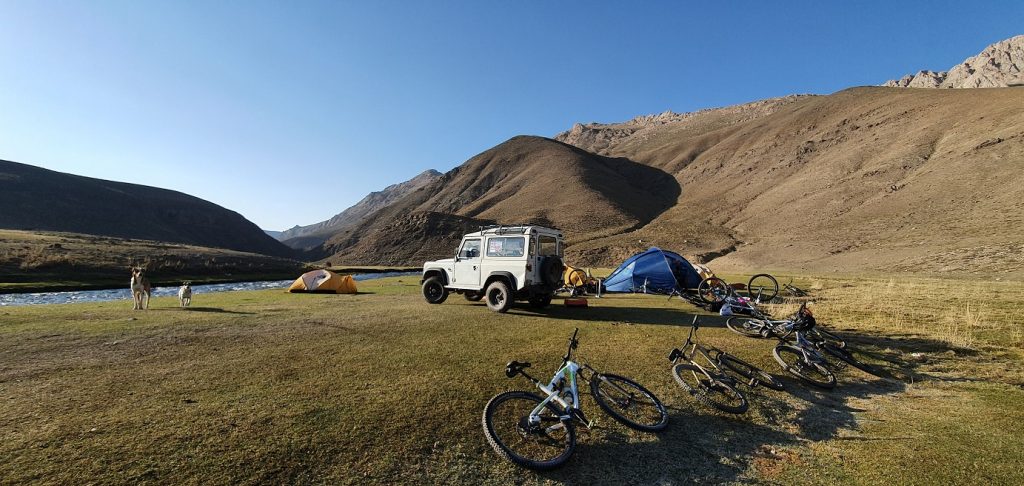
  • Camping: Many routes allow for overnight camping under the stars, particularly in remote mountain or desert areas.
  1. Cultural Considerations
  • Dress modestly in accordance with local customs.
  • Learn basic Persian phrases to enhance interactions with locals.
  • Be aware of road etiquette and always prioritize safety while cycling.
  1. Travel Permits and Visas
    Some regions require special permits, especially near borders. Ensure your travel documents are in order before embarking on your tour.

What to Expect on an Iran Cycling Tour

An Iran cycling tour is an adventure that stimulates all your senses. As you traverse the country, expect to encounter:

  • Spectacular Scenery: Towering mountains, fertile valleys, and vast deserts create a visual feast.
  • Historical Wonders: Sites like Pasargadae, Persepolis, and the ancient city of Yazd add depth to your journey.
  • Delicious Cuisine: Enjoy dishes like chelo kebab, ash reshteh, and freshly baked naan. Cycling through local markets is an excellent opportunity to sample Iran’s diverse flavors.
  • Warm Hospitality: Iranians are known for their generosity and kindness. Many will welcome you into their homes, offering tea and stories.

A Day in the Life of an Iran Cyclist

A typical day on an Iran cycling tour might look like this:

  • Start your morning with a traditional Iranian breakfast of flatbread, honey, cheese, and tea.
  • Cycle through picturesque villages, greeting locals who often cheer you on.
  • Break for lunch at a small roadside restaurant, savoring dishes like khoresht (Persian stews).
  • Spend the afternoon riding through stunning landscapes, pausing for photos or short hikes.
  • Arrive at your evening destination, where you can unwind in a cozy guesthouse or pitch a tent under the stars.

Popular Cycling Events in Iran

Iran hosts several cycling events and races throughout the year, attracting local and international participants:

  • Tour of Iran (Azarbaijan): A multi-stage professional road cycling race in the northwest.
  • Tour of Tehran: A race that combines urban and mountainous terrains.

These events showcase Iran’s potential as a top cycling destination and encourage global cyclists to explore the country.

Conclusion: Why an Iran Cycling Tour Should Be Your Next Adventure

An Iran cycling tour offers a perfect blend of natural beauty, cultural discovery, and physical challenge. Whether you’re navigating mountain trails, exploring ancient ruins, or connecting with hospitable locals, every moment on an Iranian cycling adventure is unforgettable.

about Esfahak village

about Esfahak village

Everything should know before traveling to Esfahak village


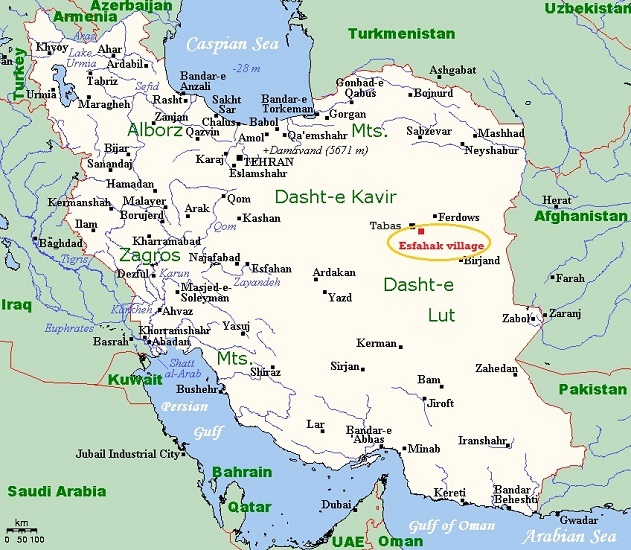
Esfahak village was registered as one of he 55 Best Tourism Villages by UN Tourism 2024 (link)


Where is Esfahak village

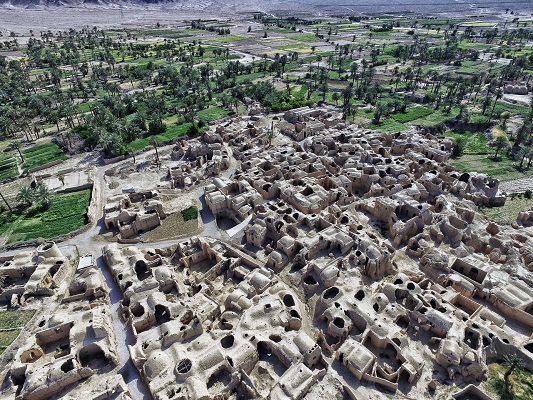
The historical village of Esfahak is in the eastern plateau of Iran, on the northern edge of the Lut plain.

Esfahak village

Why Esfahak is an attractive destination for tourism?

United Nations Tourism Organization introduced Esfahak village as one of the best tourist villages in 2024.
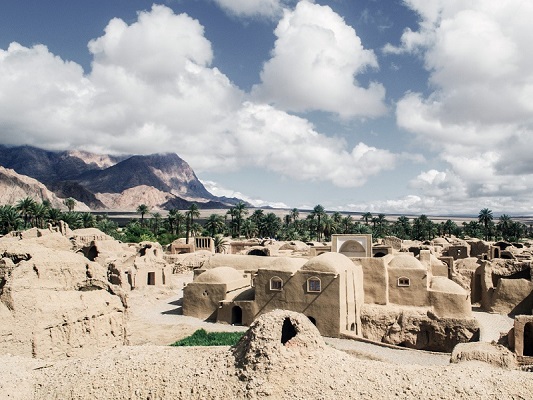
In 1357, a terrible earthquake destroyed this village. After that , many people left the village.

But since 2014, some of the villagers decided to restore the village . They preserved and revived the old and original architecture

The people used their unique assets for economic growth, promoting local traditions and improving the quality of life.

They created the necessary infrastructure for the development of tourism in this village and provided a safe, clean and healthy environment for tourists.

When is the best time to travel to Esfahak village?

If you want to travel to this village the best time is from March to May and October to December .  Because these two seasons are the best seasons to travel to the desert areas of Iran

Night sky and stargazing in Esfahak

One of the most popular attractions in desert areas is watching the starry sky at night . Esfahak village is no exception to this rule.
The people of Esfahak prevented the installation of lighting towers in the streets of the village by establishing special rules and lit them with small lanterns, thus reducing the light pollution of the village so that it is easier to see the stars.
Shortly after the reconstruction of the village, a desert observatory was built in this area to display the most beautiful night sky in front of you.

The observatory consists of three concentric brick walls that welcome tourists and desert hikers from sunset.

Esfahak architecture

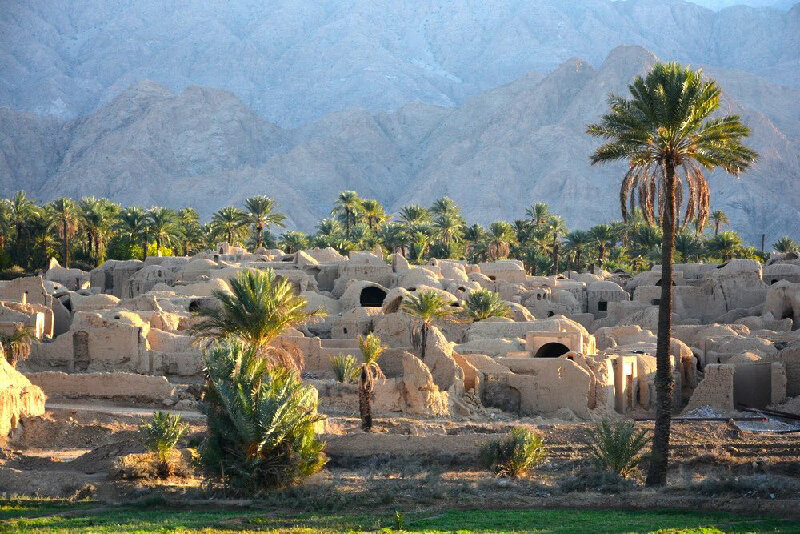
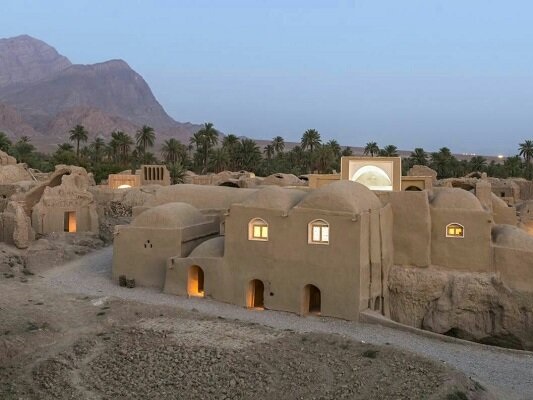
The architecture and structure are completely compatible with desert areas and the materials used in the construction of these historical houses are all clay and mud.
As a result of this type of architecture, the houses are close to each other and this makes them more secure and the risk of theft from the houses is less.
Also, this proximity of buildings helps to create more shade and minimizes heat exchange, which causes the least amount of sunlight to be received. And as a result, houses are warm in winter and cool in summer.
One of the remarkable features in the architecture of the houses of Esfak village is the dome shape of their roofs. To create shade, it is against the direction of the sun, so that during the peak hours of the sun, one side of the domes is always shaded and absorbs less heat.

Historical monuments of Esfahak village

Due to the severe earthquake that occurred in this area in 1978, many parts of the village were destroyed, but parts of it, such as the Grand Mosque, a bathhouse, and a desert observatory, still remain.

It should be mentioned that after this unfortunate incident, the village’s residents and a group of experts were rehabilitated and reconstructed the historical buildings of this village.

Grand Mosque

esfahak village

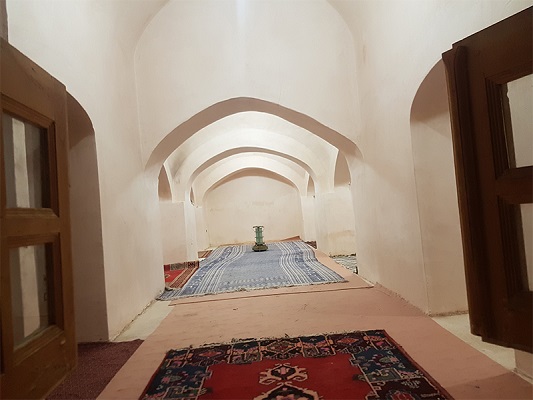
The houses of Esfahak village follow the native architecture of desert areas and Esfahak Mosque is no exception to this rule and has a small space with a straw dome and a few small windows.

Old village bath (Hammam)

Another historical building in Esfahak village  is an old bath that has a platform for sitting, a headboard, short doorways and a basin in the middle.

Desert Observatory

During the reconstruction of the historical context of the village, another part was added to the village as an observatory, which consists of three brick walls that are concentric circles.

Nature tour in Esfahak village

esfahak village

This village is on the edge of Lot desert, which is one of the largest deserts in Iran. When you travel to Esfahak, you can devote part of your time to walking around the village.

The surrounding area of ​​the village is covered with saffron and native oregano farmlands.

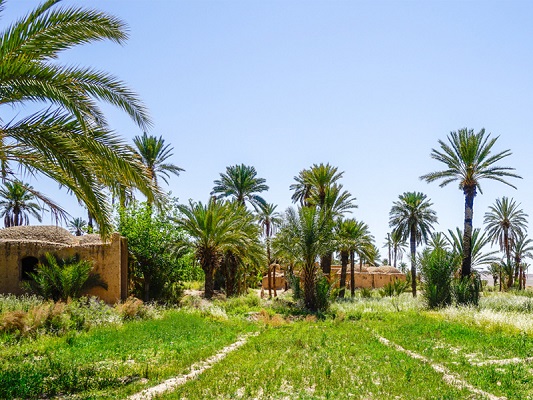
Green and tall palm trees can be seen around the village, which gives you the feeling of traveling to a different region.

The orange tree is one of the regular guests of the village, even if you close your eyes, the smell of oranges will reach your nose with the breeze.

Esfahak accommodations : Stay the night in the historic and nostalgic context of the village

Do you know eco-friendly accommodations?

In these accommodations you will feel as a guest of one of the locals . Because every single detail of these houses connects you to the local culture and lifestyle.

One of these ecotourism residences in Esfahak village is a collection of six residences .  this residence  has 22 rooms , which do not even have appliances such as beds, televisions, and refrigerators , and the toilet and bathroom are shared.
In the interior of the rooms, there are special pillows and hand-woven carpets in different colors . Also the walls of the rooms are decorated with niches and old appliances.
The purpose of all these items and details is to make you feel the sense of life in the past .

A variety of local and native foods , live and local music performances, exhibition and shops and handicrafts are among the other facilities of these residences.

Isfahak natives.

esfahak village people

Occupation of the village people and their souvenirs

It can be said that “water” is Isfahak’s biggest asset. There are several different aqueducts in and around the village itself. For this reason, the main occupation of the village people is agriculture and raising cattle and sheep.

On the other hand, the people of this village have special skills in carpet weaving. For this reason, one of the main handicrafts of Esfak is its hand-woven carpets.

If you like to shop in the village, you can take saffron, dates or rugs with you as a souvenir to help the tourism industry of the village.

Local dress of the village

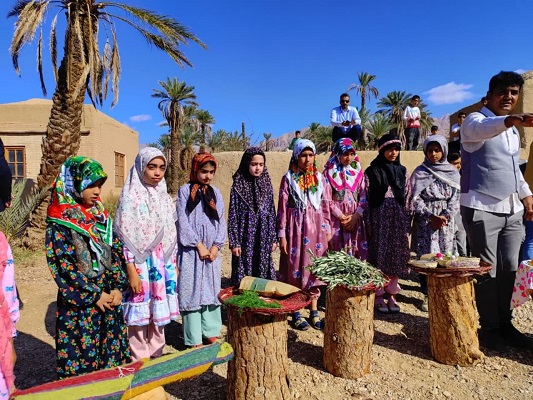
The men of Esfahak wear aprons, coats, pants, shirts, vests, hats, and shoes. The women of the village also wear long and loose shirts, pants, scarves and chadors.

The customs of the village people

One of the interesting and spectacular customs of the village is “Cheraghon” or “Cheraghon Isfaheki”. The story of this custom goes back to the time when there was no such thing as electricity or lights in the village. That’s why when it was night, people would light their oil lanterns and go to see each other.


Everything you need to know about skiing in Iran

Everything you need to know about skiing in Iran

Everything you need to know about skiing in Iran


Skiing in Iran: A Hidden Gem for Ski Enthusiasts

Iran, a mountainous country, is home to some of the most stunning alpine landscapes in the world. Over 30% of Iran’s territory is covered by rugged mountains, making it an ideal destination for outdoor sports like skiing and ski mountaineering.

With around 600 peaks over 4,000 meters in height, many of which are blanketed in snow during the winter months, Iran boasts incredible skiing conditions. These natural features make the country a top choice for skiing enthusiasts, with dozens of ski resorts spread across the region.

What sets Iran apart as a skiing destination is not just its ski resorts, but also its untouched mountain ranges, which attract ski mountaineering lovers from around the globe. Whether you’re a seasoned skier or new to the sport, Iran’s mountains offer unparalleled opportunities for adventure and exploration.

A Brief History of Skiing in Iran

Skiing in Iran dates back to early 1921, when it first gained popularity as a luxury sport among the affluent. By 1944, the establishment of the Iranian Ski Federation marked the official entry of skiing into the country’s sports scene. Following its membership in the International Ski Federation (FIS), Iran’s skiing infrastructure began to develop rapidly, making the country a hub for winter sports.

Explore more about skiing in Iran by reading our detailed articles, and get all the information you need to plan your next winter adventure in this beautiful country!

On-piste skiing in Iran

In Iran, due to the altitudes of Alborz and Zagros, as well as the high mountains of Sablan and Sahand, there are many ski resorts on the slopes of these mountains, which according to statistics reach 26.

First ski resort in Iran

Abali is the first ski resort in Iran that has lifting devices. The date of installation of its devices is 1954. Before that, athletes, especially those interested in the mountain environment and skiing, do sports in this area. Especially, because this region had very favorable weather in the summer and was also located on the main road of Tehran and the north of the country, many athletes were familiar with Ab-e-ali region.

Biggest Ski resort in Iran

Among the tracks around Tehran, Dezin track is the first offer and the best option for skiing. Dizin ski resort is considered the most equipped ski resort in Iran. Dizin has 4 cabin lifts, 2 siege lifts, 9 plate ski lifts and 1 hammer ski lift. In the summer, the Deisin track is also used for grass skiing.

The most important Iran Ski resort

1- Dizin ski resort

Iran ski resort

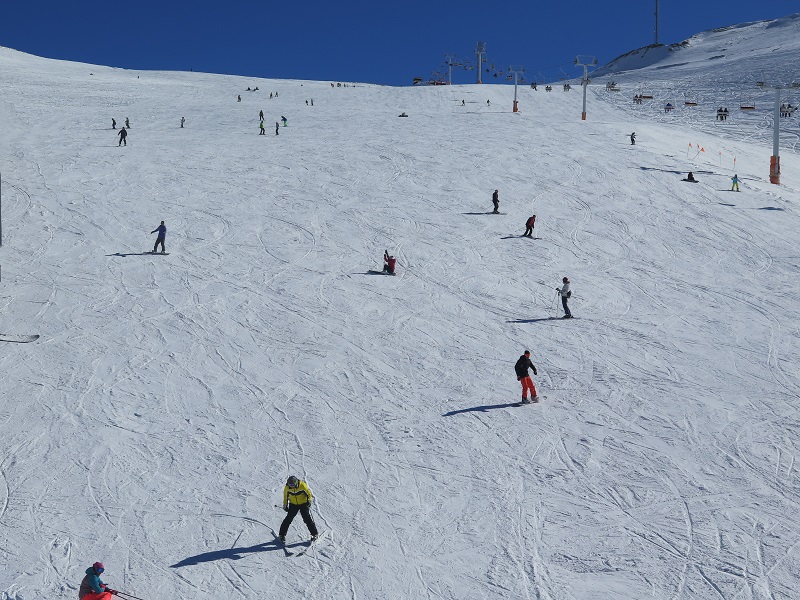
Dizin ski resort is located in the Tehran Province ,the most important Tehran ski resort and this ski area is the biggest one in Iran . There are 18 km of slopes available for skiing and snowboarding and this ski area has 18 lifts transport the guests. The winter sports area is situated between the elevations of 2,530 and 3,506 m.

Evaluation: 2.9 out of 5 stars

Ski lift : totally 18

  • Circulating ropeway/gondola lift : 5
  • Chairlift : 4
  • T-bar lift/platter/button lift  : 9

General season : late November – late May

Elevation difference : 976m (2530m-3506m)

Slopes difficulty : easy :5000m , intermediate : 9000m , hard : 4000m

Price : 25 USD

Operating time : 8:30-16:30

contact :

  • Dizin Parking Lot ,Shemshak ,Teheran ,Iran
  • Tel.: +98 / 912 / 8183454
  • Fax: +98 / 21 / 84211951
  • Email: info@dizinskiresort.com

2-Darbandsar ski resort

Iran ski

Darbandsar ski resort is located in the Tehran Province . There are 11 km of slopes available for skiing and snowboarding and this ski area is equipped by 6 lifts transport the guests. The winter sports area is situated between the elevations of 2,650 and 3,510 m.

Evaluation: 2.8 out of 5 stars

Ski lift : totally 6

  • Circulating ropeway/gondola lift : 1
  • Chairlift : 3
  • T-bar lift/platter/button lift  : 2

General season : mid December – early May

Elevation difference : 860m (2650m-3510m)

Slopes difficulty : easy :6000m , intermediate : 5000m , hard : 0m

Price : 25 USD

Operating time : 8:30-21:00

contact :

  • Darbandsar ski resort ,Shemshak ,Teheran ,Iran
  • Tel.: +98 / 9391204040
  • Fax: +98 / 21 / 7518600
  • Email: info@darbandsarski.ir

3-Shirbad ski resort

Iran ski

Shirbad is the biggest ski resort in Razavi Khorasan Province (Iran). There are  about 1.1 km of slopes available for skiing and snowboarding also one lift transports skiers. The Shirbad ski area is situated between the elevations of 3,000 and 3,200 m.

Evaluation: 2.2 out of 5 stars

Ski lift : T-bar lift/platter/button lift (1)

General season : mid December to late May

Elevation difference : 200m (3000m-3200m)

Slopes difficulty : easy :600m , intermediate : 300m , hard : 200m

Price : 10 USD

Operating time : 8:30-16:00

contact :

Khorasan Razavi ,Mashhad , Iran
Tel.: +98 / 511 / 6656330
Fax: +98 / 511 / 6656330
Email: info@skishirbad.com

4- Sahand ski resort

iran ski

Sahand ski resort  is one of the sights of East Azarbaijan province( Iran).There are 3 km of slopes available for skiing and snowboarding . this ski area is equipped by 4 lifts  to transport the  skiers .

The winter sports area is situated between the elevations of 2,915 and 3,295 m.

Sahand ski resort is in 40 km south-east of Tabriz city , on the north side of Sahand mountains . This ski area  has a ski school . There are two 1200 m surface lifts for intermediate users and two 100 m surface lifts for beginners .

Evaluation: 2.2 out of 5 stars

Ski lift : totally 4

  • Rope tow/baby lift : 2
  • T-bar lift/platter/button lift  : 2

General season : mid December – early May

Elevation difference : 380m (2915m-3295m)

Slopes difficulty : easy :1000m , intermediate : 2000m , hard : 0m

Price : 10 USD

Operating time : 8:30-16:00

contact :

  • Sahand ski resort ,Tabriz , East Azarbaijan,Iran
  • Tel.: +98 / 41/34416895

5-Tochal ski resort

Iran ski resort

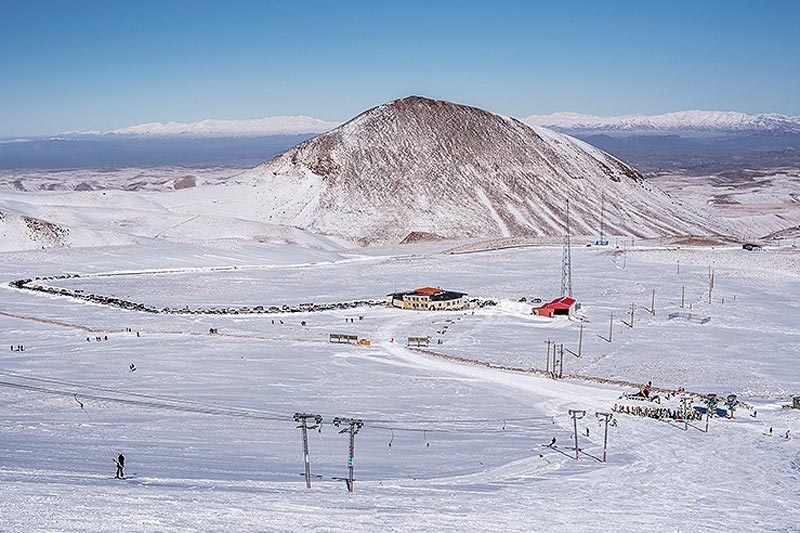
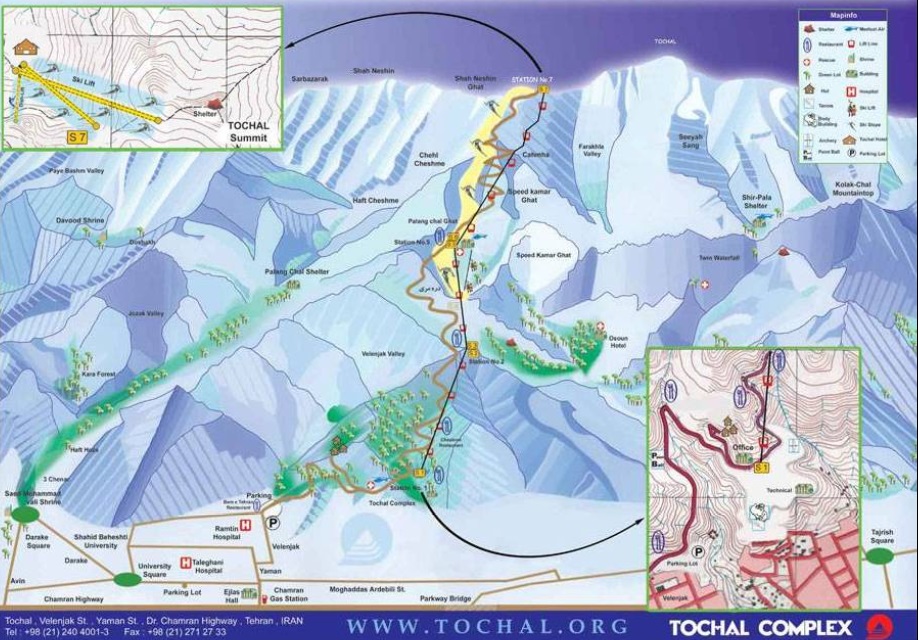
Tochal ski resort is located in the Tehran Province (Iran) and is the highest ski resort in Iran . There are 6 km of slopes available for skiing and snowboarding and this ski area is equipped by 3 lifts transport the skiers .

The winter sports area is situated between the elevations of 1,910 and 3,850 m

Evaluation: 2.2 out of 5 stars

Ski lift : totally 3

  • Circulating ropeway/gondola lift : 1
  • Chairlift : 2

General season : late November – late May

Elevation difference : 1940m (1910m-3850m)

Slopes difficulty : easy :6000m , intermediate : 0m , hard : 0m

Price : 10 USD

Operating time : 8:30-15:30

contact :

  • Teheran ,Iran
  • Tel.: +98 / 21 / 22404001
  • Fax: +98 / 21 / 22435933
  • Email: info@tochal.org

6-Shemshak ski resort

Iran ski

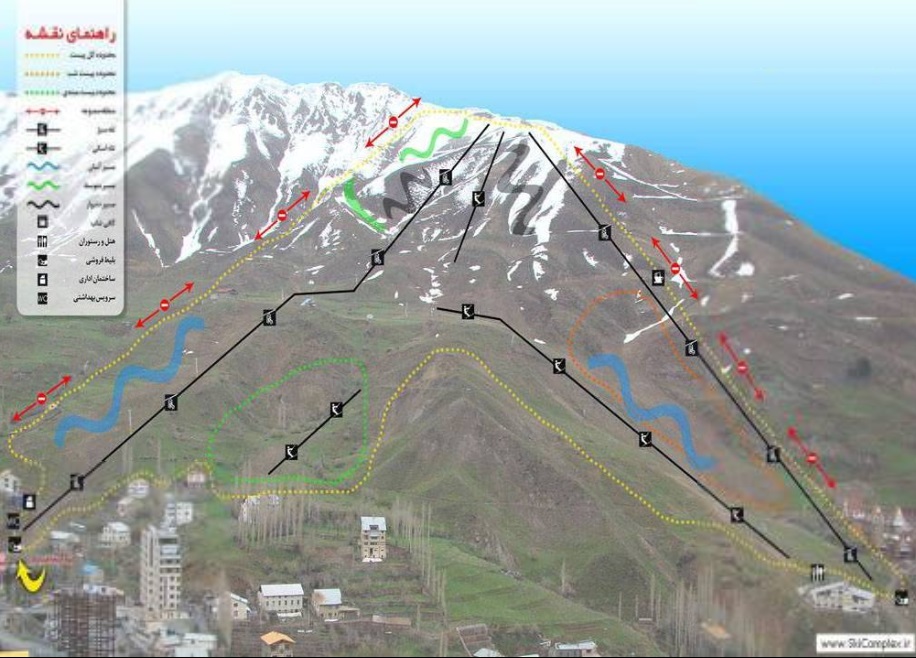
Shemshak ski resort  is located in Tehran Province (Iran). There are 15 km of slopes available for skiing and snowboarding and also it is equipped by  5 lifts to transport the skiers .

The winter sports area is situated between the elevations of 2,550 and 3,050 m.

Evaluation: 2.2 out of 5 stars

Ski lift : totally 5

  • Circulating ropeway/gondola lift : 3
  • Chairlift : 2

General season : mid December – early April

Elevation difference : 500m (2550m-3050m)

Slopes difficulty : easy :6000m , intermediate : 6000m , hard : 3000m

Price : 15 USD

Operating time : 8:30-21:00

contact :

  • Teheran ,Iran
  • Tel.: +98 / 21 / 26526912
  • Email:info@skicomplex.ir

Ski mountaineering in Iran

More than a thirty percent of Iran’s area is mountainous, and there are about 600 peaks above 4000 meters in Iran, the highest of which is Damavand peak with a height of 5610 meters. Many of these peaks are covered with snow in the winter and are therefore suitable places for ski mountaineering in Iran .
Here we introduce some of the most popular mountain areas in Iran for ski touring :

1. Around Tehran’s big ski resorts (Central Elburz)

The closest and most accessible place for mountain skiing is around the big ski slopes around Tehran: Dizin, Shamshak, Darbandsar (these three slopes are located near each other and within a radius of 5 kilometers), and with an hour’s drive from Tehran, you can go to Reach these tracks.

Also, Tuchal ski resort, which is attached to the city of Tehran and is located near Tuchal peak, is also a special area for mountain skiing.
Apart from being close to Tehran, which is the capital of Iran.

these areas also have other advantages: the variety of routes, the presence of peaks above 3000 meters and 4000 meters, and various accommodation facilities, from local houses to well-equipped hotels and luxury restaurants.

Our suggested routes for skiing in Central Alborz region:
  • Abak peak (3400 meters) in the south and near Shamshak ski resort
  • Klon Bestak peak (4150 meters) in the northeast of Dizin and Darbandsar ski resorts
  • Traverse from Preseth Darbandsar to Dizin
  • North and northwest front of Tuchal peak (3960 meters) through the Tuchal ski resort

2. Areas around Mount Damavand

Damavand climbing

Mount Damavand with a height of 5610 meters acts like a magnet for most ski mountaineers. It is difficult to climb in winter due to unstable conditions, high speed winds and low temperature, and it is better to plan your trip to this area from the end of March.
With an hour’s drive, you can reach Polur village at the foot of Damavand mountain.

You can stay in Polur village in local houses or at the Iran Mountaineering Federation’s camp, and from there you will easily access the ski mountaineering areas. .

Our suggested routes for skiing around Damavand:
  • Climbing Damavand Peak from the southern route, which is the most attractive and safest way to climb Damavand Peak with skis.
  • Skiing in the Lasem valley and the 4000-meter peaks of Doberar, for skiing in this area, you can  also stay in Lasem village.
  • Climbing Pashure or Gol Zard peaks is a suitable option for air conditioning

Zagros , Koohrang , Chelgerd

One of the well-known destinations for mountain skiing in Iran is the Zagros mountain range. The Zagros mountain range extends from the north-west to the south-east of Iran, but the most popular part of it for mountain skiing is the Kohrang area, and many ski tours are held in this area every year.
The small town of Chalgerd is the center of Kohrang region and is located 3 hours away from Isfahan city, and since it has good access to the peaks and routes suitable for skiing, it is very suitable for accommodation.
Kohrang area is located on the slopes of Zardkouh mountain, the highest peak of which is Klonchin with a height of 4200 meters.

There are many and varied mountain ski trails in this area, some of the most famous of which are:

Skiing from Sheikh-Alikhan village to Mohammad Abad village

Ski tour on Mohammad Abad peak(3350m)

Niakan Peak(3500m)

Gilas peak (3280m)

Shah Mansouri peak(3650m)

Samsami peak (3500m)

Damavand packing list

Damavand packing list

THE COMPLETE DAMAVAND PACKING LIST

In order to be safe and comfortable throughout your Mount Damavand climb, you’ll need to bring important gear and supplies with you ,  therefore we’ve prepared a comprehensive Damavand packing list to help you prepare for your climb.

Since mountaineering on Damavand includes different climate zones from hot and dry to cold peak areas with glaciers, ice and snow, you should be prepared for all Damavand weather conditions : for example, sunny weather, wind and rain, etc.

Trekking Damavand includes different climate zones, from hot and dry to the region of cold peaks, with natural glaciers, ice and snow . You should be prepared for all conditions , for example : sunny, windy, and rainy.

If you travel to Damavand with our group [ persiatrek ], equipment such as tents, camping equipment, food, cooking facilities, and other common items will be provided by us. As a result, you will only need a backpack to carry your daily hiking gear, and your other equipment will be carried by mules.

Damavand Gear List

Finally, if you are packing to climb Damavand, it is important to really plan your equipment properly. For this reason, we recommend packing the following:

  • Base layers
  • Backpack (30 to 40 Liter)
  • Wind stoppers (polar jacket)
  • Warm trekking pants
  • Light down jacket
  • Waterproof jacket
  • Warm hat
  • Waterproof Trekking boots
  • Sleeping bag (comfort level :+5)
  • Warm gloves
  • Sunglasses
  • Sun creams
  • Headlight
  • Sticks , poles
  • Mattress

Basic Equipment

Damavand packing list

Day-pack : Your main gear will be carried by mule (up to 10kg) then you will need to carry your own day-pack. 30-40L is sufficient.

Waterproof duffle bag: In order to carry your main gear we recommend using a 80-90L duffle bag. Large rucksacks (>65L) can also work.


Sleeping bag: You will need a 4-season or -10 Deg C sleeping bag and compression sack.

Trekking poles: without a doubt trekking poles can reduce the impact on your joints by up to 20%. They are great for going down Damavand!

Neck gaiter or scarf:  in brief It can get dusty on Damavand. We recommend bringing a neck gaiter or bandana.

Head

Sunglasses: Choose a pair of high UV protection glasses as sun intensity above 4,500m is very high. Julbo are a great mountain sunglass brand but any brand with high UV protection will suffice

Sun hat: Preferably go for a hat that is wide-brimmed for protection, and has a neck cover if you aren’t going to be wearing a neck gaiter

Headlamp:  in brief You will need a headlamp with good light output for any late night toilet journeys, and importantly for summit night.

Hands and Feet

Warm gloves or mittens: For the cold nights and for the summit push we recommend heavyweight, insulated, preferably water resistant gloves.

Lightweight Gloves:  in brief For lower slopes we recommend lightweight, fleece or quick drying fabric gloves.

Damavand packing list

Trekking boots: We recommend using a mid-weight trekking boots with good ankle support.

Training shoes: To wear around camp after a day’s trek we recommend bringing a pair of training shoes or sandals

Socks: 3-4 pairs of outer socks and 2-3 pairs of liner socks. We also recommend bringing 1 x thick thermal socks for summit night.

Gaiters: Help keep your trousers clean in wet and muddy or dusty conditions.

Upper body

Thermal base layer: 1 x thermal base layer, ideally made from merino wool.

Short sleeved shirt: 2 x lightweight, moisture wicking short sleeved shirts.

Long sleeve shirt: Go for a light or medium weight, moisture wicking long sleeve shirt (x2).

Fleece or soft shell jacket: A mid-weight polartec fleece jacket is ideal for Damavand.

Insulated jacket: in brief​ A good quality and warm down or PrimaLoft jacket is required for the cold nights and summit push.

Hard shell outer jacket: A water/windproof hard shell outer jacket to protect you from the elements. Goretex material is best.

Legs

Leggings:  in brief Thermal or fleece base layer for your legs. Merino wool is preferable.

Trekking trousers: Light or medium weight (x1) trekking trousers. Convertible trousers are an option.

Hard shell trousers: To protect yourself from the elements you need a good pair of waterproof / windproof hard shell trousers. Ideally Goretex.

Other Bits and Bobs


Plug Adapter: A plug adapter for charging your devices in the hotels before and after the trek. The standard voltage and frequency in Iran is 230 V and 50 Hz respectively. The power sockets that are used are of type D / G

Camera and spare batteries: Unless you are a keen photographer we recommend taking a good quality and lightweight point and shoot camera like the Panasonic Lumix.

Sun and lip screen: High SPF sunscreen and lip protection balm

Toothbrush and toothpaste: Ideally travel size

Personal snacks: Boiled sweets, nuts, energy bars and dried fruit are all a good shout. Isotonic drink powder to mix in with your water improves flavour and helps replace electrolytes

Ear plugs: For light sleepers. Snoring travels in quiet high altitude camps!

Wet wipes and hand sanitizer:  in fact Staying clean on Damavand is a challenge. Wet wipes and hand sanitizer are a huge help

Pee bottle (optional): Useful for the ladies, but not a requirement

​Essential Damavand Packing List: Comprehensive Guide

Preparing for your Damavand adventure requires careful planning and packing. Here is a detailed guide to ensure you have everything you need for a safe and enjoyable trip.


Packing Basics

  • Mule Carriage: Mules will carry your main bag (up to 10 kg).

  • Waterproof Protection: Wrap your clothes in durable, waterproof bags to prevent damage.

  • Daily Backpack Essentials:

    • Water

    • Sunglasses

    • Camera

    • Binoculars

    • Rain pants and jacket

    • Other personal items for daytime use (main bag is accessible only at the end of the day).

  • Battery Care: Cold weather shortens battery life. Carry extra batteries.

  • Air Travel Tip: Pack crucial climbing equipment, especially boots, in your carry-on to avoid issues with delayed luggage.

  • Gift Idea: Vintage warm clothing items make great gifts for guides and porters.


Damavand Clothing Essentials

Layering Strategy: Effective layering ensures comfort in changing weather conditions.

  • Base Layer:

    • Breathable and moisture-wicking fabrics (avoid cotton).

    • Merino wool or merino-synthetic blends are excellent choices.

  • Mid-Layer:

    • Insulating and warm materials like Polartec fleece.

    • Retains body heat while allowing sweat to evaporate.

  • Outer Layer:

    • Waterproof and breathable jackets/pants.

    • Ensure they fit over other layers comfortably.

  • Additional Clothing Tips:

    • Pack clothes for walking, evening relaxation, and sleeping.

    • Avoid jeans; they’re unsuitable for hiking.

    • Bring a down jacket for summit day and chilly evenings.

    • Choose quick-drying, hand-washable clothing for convenience.

Accessories:

  • Gloves: Ensure inner gloves fit comfortably inside thermal gloves.

  • Hats: Pack a warm thermal hat and a sun-protective hat.

  • Sunglasses: 100% UV protection, preferably wraparound style.


Footwear and Trekking Poles

  • Hiking Boots:

    • Lightweight to medium waterproof boots with good ankle support.

    • Ensure they’re broken in and comfortable with thick socks.

  • Gaiters: Protect against mud, debris, and snow.

  • Socks:

    • Inner socks to wick moisture.

    • Outer socks for cushioning and warmth (avoid cotton).

  • Trekking Poles:

    • Highly recommended for balance and reducing fatigue. Practice at home before your trip.


Lighting Gear

  • Head Torch: Lightweight with a strong beam (e.g., Petzl or Black Diamond).

  • Spare Batteries: Necessary due to the cold weather.

  • Optional: Mini flashlight for tent use after dark.


Sleeping Equipment

  • Sleeping Bag:

    • Four-season bag rated for -5°C to -10°C.

    • Mummy-shaped bags with hoods provide optimal insulation.

    • Down sleeping bags are lightweight and compress easily but require waterproof storage.

  • Sleeping Bag Liner: Adds warmth and keeps the bag clean.

  • Sleeping Pad: Provided, but you can bring your own for extra comfort.

  • Compression Sack: Ensures compact packing.

  • Pillow: Optional; many hikers use clothing as a pillow.


Bags and Backpacks

  • Main Bag: Waterproof duffel bag, e.g., The North Face Basecamp (90 liters).

  • Daypack:

    • Comfortable with adjustable straps and a hip belt.

    • Roomy enough for daily essentials (hydration system, rain gear, snacks).

    • Include an internal rain cover if not built-in.


Water and Snacks

  • Hydration:

    • 2-3L water bladder (e.g., Camelbak).

    • 1-2L wide-mouth water bottles (e.g., Nalgene).

  • Electrolytes: Powdered formulas to flavor water and replenish nutrients.

  • Snacks:

    • Energy bars, trail mix, or candy for quick energy boosts.

  • Pro Tip: Use a hot water-filled bottle in your sleeping bag for overnight warmth.


Health and Hygiene

  • Toiletries:

    • Toothbrush, toothpaste, hairbrush, foot powder, deodorant.

    • Wet wipes and hand-sanitizer wipes for cleanliness.

    • Sunscreen (SPF 40+), quick-dry microfiber towel.

  • Personal Medications: Include regular prescriptions and altitude sickness prevention like Diamox.

  • First Aid Kit:

    • Blister plasters, antibiotic cream, pain relief (Ibuprofen/Paracetamol).

    • Skin healing ointments, anti-diarrheal, and anti-nausea medication.


Additional Tips for Your Damavand Packing List

  1. Start Early: Begin gathering items well in advance to avoid last-minute stress.

  2. Practice: Familiarize yourself with packing, unpacking, and using gear.

  3. Test Gear: Break in boots, adjust backpacks, and layer clothing at home.

  4. Leave Extra Luggage: Secure additional belongings at your hotel during the climb.

  5. Ask for Help: Reach out to your tour operator for guidance on your Damavand packing list.

With proper preparation, you can confidently tackle the challenges of climbing Damavand and enjoy the breathtaking experience!

Train for climbing mount Damavand

Train for climbing mount Damavand

HOW SHOULD I TRAIN FOR CLIMBING MOUNT DAMAVAND

One of the biggest challenges that climbers face when climbing mount Damavand is adapting to its thinner air compared to lower peaks.

The effects of high altitude are always one of the most important reasons for climbers’ failure to reach high peaks and this is the same for all climbers. No matter how physically fit and strong you are, you can still get acute mountain sickness.

In this article, we would like to provide you with a complete educational resource for achieving the necessary physical fitness to climb Damavand and also focus on strategies you can use to increase your chance for acclimatization and being ready for climbing mount Damavand.

Will you perform well in the mountains?

Both yes and no.

You cannot say for sure whether you are ready or not until you are in the mountain conditions even if you have the best performance in sports clubs.

The best training for climbing is climbing.

If there are high mountains near you, before climbing mount Damavand, be sure to train in those mountains to get used to the high altitude conditions. Training at altitudes above 3000 meters gives you a good idea of how your body reacts to altitude.

One of the advantages of Damavand Peak is that there are many high peaks above 3000 meters near it, and
If you do not have the possibility to climb high peaks in your country, you can climb one or more peaks higher than 3000 or 4000 meters in Iran before climbing mt Damavand to get the necessary preparation.

Here you can see some tours that include a preparation program by climbing one or more peaks above 4000 meters in Iran before climbing Damavand:

Alam Kuh and Mount Damavand trekking

Damavand – Alam Kuh – Sabalan trekking

Touchal – Damavand tour

Effects of altitude on your body

See 6 Tips for Damavand Mount acclimatization for a more in-depth look at the effects of altitude.

At Damavand’s summit, there is about 50% less oxygen available than at sea-level. Your body needs to adapt in order to compensate for the fact that with every breath, less oxygen is delivered to your muscles and brain.

High altitude sickness (AMS) is a dangerous condition. However, many people experience some of the effects of altitude without developing AMS.

Some of symptoms you might notice:

  • Breathing deeper and faster.
  • Higher pulse rate, even when resting.
  • Elevated blood pressure.
  • Difficulty sleeping
  • Headaches and fatigue

The relationship between physical fitness and acclimatization?

Your physical fitness will not have a significant impact on your ability to adapt. Your body needs time to adapt to high altitude conditions where the air is thinner and less oxygen.

That being said, the more effort you put in at altitude, the harder it is for your body to adapt. So fitness can mean the difference between 60% activity at 14,000 feet or 85% activity at the same altitude.

According to the US Army Research Institute of Environmental Medicine, “sustained physical exertion early in the altitude exposure substantially increases AMS incidence and severity”.

So, while being physically “fitter” than others doesn’t increase your body’s ability to adapt, it probably makes the difference between how intense the workout is.

In addition, sometimes athletes who are very fit tend to move faster, relieve symptoms, and exert more effort than climbers who are less fit. The key is to hike below your physical limits to help your body adapt and reduce fatigue.

Where is the best place for training high altitudes?

The best training for climbing is climbing” this is an old proverb that is common among climbers and many of them use this proverb as an excuse to avoid doing additional training activities for climbing.

In response to the question, “Is climbing the best exercise for climbing?” This answer can be given as: It depends on our purpose of training.

Two training methods can be used in climbing mount Damavand:

1- During the period of development of technical and mental climbing skills, which requires a person to be in the real conditions of climbing, the only possible way to practice is climbing.

2- In order to reach high levels of physical fitness (for example, “increasing your VO2 Max…) you need consistent and purposeful exercises such as aerobics, which should be placed as a supplement along with climbing activities.

But to prepare for entering high altitudes and to examine the effects of altitude on the body, as well as to increase the ability to adapt to altitude, climbing at altitudes above 3000 meters is definitely the best way.

How do you train for high altitude and low oxygen environments?

Training for high altitude

One of the biggest dangers that threaten you at altitudes above 2000 meters is acute mountain sickness. You should be familiar with this disease and its symptoms.

Gradually increase exposure to high altitude

Practice at high altitude before your main climb. The best way to prepare for climbing a peak higher than 5000 meters is to climb a peak with a height of at least 3000-4000 meters in a period of two months before the main plan.

How do you train for high altitude and low oxygen environments?

Genetics

While training can have a big impact on how you perform at altitude, you still can’t escape the influence of genetics. Your genes play a role in regulating your exercise capacity and your ability to perform in low oxygen.

There is no substitute for acclimatization

Since the body’s reaction to high altitude can be unpredictable and is related to many factors, your first trip to high altitude should be quite conservative both in maximum altitude and in the amount of ascent.

Consider the VO2 Max test

VO2 max is the maximum amount of oxygen your body can consume and use during intense exercise. VO2 max decreases at altitude, making your body work harder than at lower altitudes. If you’re increasing your VO2 max, you’re likely increasing your fitness as well. Start a training program aimed at increasing your VO2 max (including exercises such as sprinting) and monitor your progress.

Training with weight

You can increase your VO2 through weight training, slowly increasing the weight you carry in your pack until you exceed the weight you are carrying on your trip. This will help you prepare for those long-distance loads.

Be strong and fit Weight

Aerobic fitness, and overall strength all play a role in how your body responds to the high demands of high altitude climbing. Strength training helps prepare your leg and upper body muscles for a heavy load, as well as core exercises.

Hill workout – stress test your body

One of the key components of high altitude preparation is hill training. Whether you can train at altitude or not, hill training should be a central part of your exercise program. Steep walks are very important for your preparation.

Consider preventive medications If you have a history of altitude sickness, or if you have to go to high altitude sooner because you don’t have enough time, it is wise to ask your doctor about taking a preventive medicine such as Diamox. These drugs can reduce the risk of developing acute mountain sickness or reduce the severity of symptoms.

Putting in the Hours

There is no  substitute for hours training. It is very important to build slowly over months of preparation. You need to build up the weight you carry and hours of training per week. This will vary for trip to trip. It is best to contact us and we can guide you on training for the specific trip you are planning.

Last tips for climbing mount Damavand

Tips for climbing Kilimanjaro Persiaterk recommends arriving in Iran at least one or two days before climbing. Allow yourself to recover from the trip, adjust to the time change, and rest well before starting the climb Go slow, don’t walk in front of the pack, keep your energy up no matter how fit you are. Stay hydrated. Dry air and exercise will dehydrate your body. Be sure to drink plenty of water and take an electrolyte supplement to maintain your mineral balance. Dehydration significantly impairs physical performance Eat carbohydrates. No matter what diet plan you follow at home, you need those carbs. Studies have shown that a high carbohydrate diet at altitude stimulates ventilation and improves blood oxygenation. Adequate carbohydrates replenish your muscle glycogen, maintain blood sugar levels during activity, and speed recovery.

Contact us today and start your trekking and mountaineering journey. meet our Damavand tours.

× How can I help you?