
Bakhtiari groups
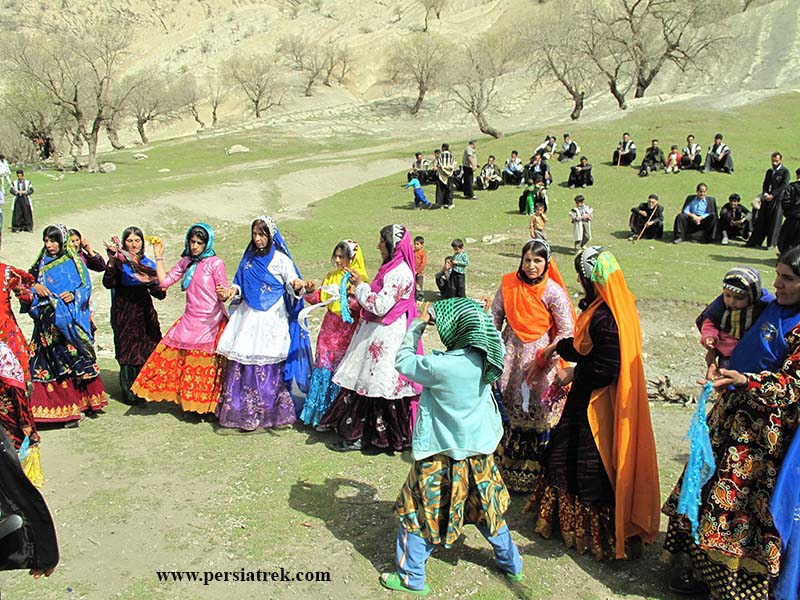
Bakhtiari groups : You have probably heard the name of Soraya Bakhtiari, the Iranian-German queen of Iran, or Shapur Bakhtiar, the last prime minister of the Pahlavi kingdom.
What about the NFL Green Bay Packers player David Bakhtiari? All of them are members or descendants of the Bakhtiari groups.

Soraya Esfandiary-Bakhtiary was the queen consort of Iran as the second wife of Shah Mohammad Reza Pahlavi, and an actress.
The Bakhtiari is one of the largest and most prominent groups of Iran.
Despite the great personalities that belong to this people, but the Bakhtiari people are rooted in humility and respect for nature.
Although the origins of the groups are debated, the Bakhtiari themselves trace their lineage directly from Cyrus the Great.
Others claim that they are descendants of the Iranian epic hero Fereydoon. But what is certain is that they have been roaming the lands of Persia for thousands of years and are an integral part of its history.

The Bakhtiari groups live between the region of Khuzestan and Chaharmahal va Bakhtiari (Yes, that’s right. They speak a dialect of Persian called Lori and are Shia Muslims like the majority of the country.
Today, the estimation shows that only a third of the groups remains nomadic. Since many have settled down to become agriculturist.
Some others were forced to move to cities due to economic hardship and unemployment. Yet, those that continue the nomadic lifestyle undergo one of the most challenging and fascinating migratory traditions alive.
Bakhtiari History
Throughout most of Iran’s history, the Bakhtiari have lived as independent smaller clans and only formed a union during the reign of Shah Abbas the First in the 16th century.
Shāh Abbās the Great or Shāh Abbās I of Persia was the 5th Safavid Shah of Iran, and is generally considered the strongest ruler of the Safavid dynasty. He died in 1629 and is buried in Kashan, Iran
They created this union or confederacy for self-defense and self-preservation against attempts by the central Persian government to control these clans. And so, for four hundred years this power struggle between the groups and the Persian rulers continued.
At one point, Nader Shah expelled 3000 Bakhtiari to Khorasan after shutting down a rebellion. Some were then forcefully drafted into the army and sent to campaigns in India! (You can still find their descendants in India today)
Yet, the Bakhtiari never gave up on their desire for a fair ruling by the central government. When Naser al-Din Shah became more autocratic and tried to bypass the constitution, it was Bakhtiari warriors who captured Tehran in 1909 and pushed for the implementation of the constitution.
The Bakhtiari and the Oil Industry
Let’s also not forget that oil was first found in Iran on the winter grazing grounds of the Bakhtiari.
The British, who were the first exploiters of Iran’s oil, knew they had to have some form of agreement with the Bakhtiari to be able to continue their oil exploitation and production. But Reza Shah, like many kings before him, was worried about the groups growing power. He ordered that the British deal directly with the Government of Khuzestan instead of the Bakhtiari Khans. Then he arrested, tortured or executed many of their leaders.
Reza Shah’s nationalization policies also worked to force all subjects, including the Bakhtiari, to speak one dialect of Persian and learn one version of the history of Iran in school, ignoring the multi-ethnic diversity that has always existed in Iran.
Subsequent governments also continued these practices and tried to encourage or force the Bakhtiari nomads to adopt sedentary lifestyles. However, this does not mean the Bakhtiari faded from the front pages of Iranian history. For some very interesting life stories, look up Teymour Bakhtiar, Queen Soraya, or Shapour Bakhtiar.
Bakhtiari Culture

Much of Bakhtiari culture is based on their seasonal migration and the fact that their primary source of income is their livestock. For example, they eat little meat during the migratory period as the meat will make them feel heavy and stop them from moving quickly. Instead, they use milk, yogurt and dough as their main source of nutrient during this period.
Even their handicrafts contain the hairs of the animals they take care of. The Bakhtiari are famous for their black tents, Siah Chador, which is waterproof and woven using the wool of their goats.
Even more well known are their carpets, made from ewe wool and typically with geometric or floral designs and famous for their vibrant colors.
You can travel to Iran and meet Bakhtiari groups with www.persiatrek.com
The Family Contribution
All people have hard working days. As the men go out to farm and shepherd, the women bake bread, fetch water, milk the goats, and take care of all other household needs.

A common sight you will see is what looks like a large waterskin swing. The water skin, called Mashk, is usually made out of cow or sheep bladder because it works well to retain water. Milk is poured into it and two women work to swing it back and forth, so much that butter eventually floats up. During this process, the women sing traditional songs to make the work more enjoyable.
The Bakhtiari have many folk songs for every occasion. Check out some audio clips of their songs sung during the Kuch.
Bakhtiari groups Clothing
The men wear a no-rimmed wool black hat, baggy trousers and a coat with black and white stripes called Chogha. The women wear long flowy skirts and scarves usually detailed with stitching, coins or other gold and silver objects.
Although the style of clothing really depends on the weather and the groups, oftentimes you’ll see a wonderful array of colors being used. The simplicity of the possessions they own also roots from their nomadic lifestyle.
Since they have to move their homes twice a year, through rugged terrain and dangerous mountaintops, the less they own, the easier it is to move. This isn’t to say they are poor. The amount of livestock nomadic families own can end up being of high value.
Meet our Zagros trekking tour Here
Social Structure of the Bakhtiari groups

Each nomadic groups in Iran has a very diverse history and culture. Yet, even within the Bakhtiari groups, you can see a lot of differences. Such differences are in terms of ethnic background, traditions and everyday lifestyles.
The unity of these clans is due to a social structure which is based on a number of social hierarchies of several categories.
The smallest and closest unit is the nuclear family, Bahon, who live under one tent. Throughout the year, they live with several other tents composed of the extended patrilineal family (Olad), creating a kind of encampment known as Mal.
In the past, when it came time to migrate, the Olads traveled in joint family groups known as Tira. This was the largest social unit that you would see living in one location as the Bakhtiari tend to spread out to avoid scarcity of natural resources in one area. Back then, it was important to travel in large groups as there were many thieves and dangerous animals along the route.
Today, these dangers have mostly disappeared and it is more common to see only two or three families traveling together.
You can book our ski tour in Zagros and meet Bakhtiari groups here
The Epic Migration of Bakhtiari groups

Twice a year, around 200,000 nomadic Bakhtiaris make a 300-kilometer journey with their entire flock of sheep across the steep mountain passes of the Zagros.
Throughout the years, since only a few safe pathways exist across the treacherous mountaintops, they have no choice to use the same passes every year.
The groups moves from the cool pastures used in the summer to warmer regions for the winter and vice versa. Yehlagh is the summer abode high up in the mountains and Garmsir is the winter home in the low hills of Khuzestan.
Sources:
http://www.bakhtiarifamily.com
People of the Wind (1976)
Iran’s biggest secret: the skiing’s great
Iran's biggest secret: the skiing's great Sick of the braying hordes of Meribel and Val d'Isère? Looking for a more exotic ski holiday? Then head for Tehran. Comedian Dom Joly finds beautiful peaks and great powder in Iran It all started with a photograph in a...
About Alborz mountain range
About Alborz mountain range The Alborz , also you can spell it as: Alburz, Elburz or Elborz where is a mountain range in north of Iran plateau that stretches from the border of Azerbaijan along the western and also entire southern coast of the Caspian Sea And ends...
Dizin ski touring
Dizin ski touring Dizin ski touring , today(12 jan. 2018) we did our first ski mountaineering effort in 2018 .our group was consist of :me(Mehdi Farhadi) and two member of our group in "PersiaTrek" co. : Farah Mansouri and Ehsan Partovinia . we did it in Dizin...
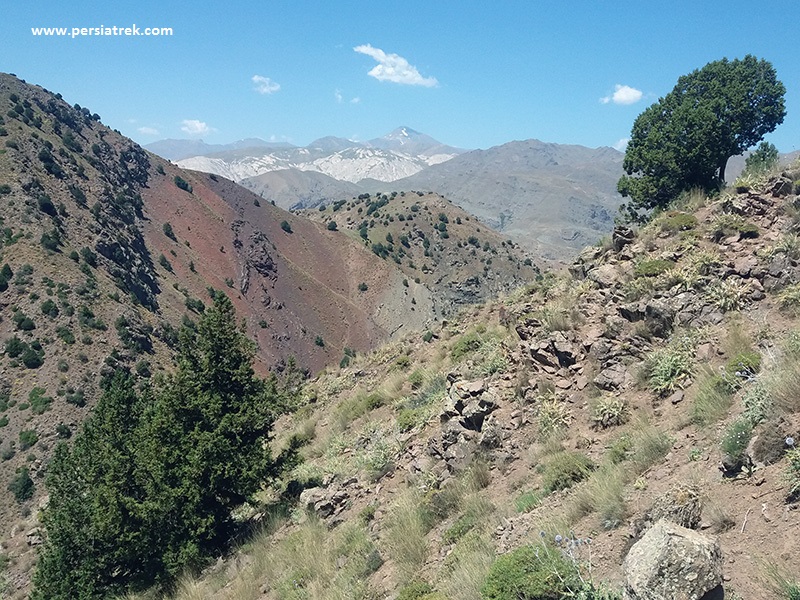
Alamut region, Paradise of Natural and Cultural Tourism of Iran
Alamut region, Paradise of Natural and Cultural Tourism of Iran Where is Alamut region ? Alamut region is a very beautiful and historic region in north east of Qazvin province . it has plenty of touristic attraction ,in addition Alamut is consist of lots of valley...
Alamut Trekking
why you should visit Alamut Alamut trekking tour could be one of the best choices for an adventurous and cultural touristic trip to Iran. Some of the most mysterious tourist attractions in Iran are located in the valleys of Alamut and Shahrud. The stranded peaks of...
Damavnad Trekking tour
Why Mount Damavand trekking ? Damavand trekking : Mount Damavand is one of the most popular ecotourism destinations in Iran . for sure Mount Damavand trekking is the most attraction of Iran because of many reason such as: Damavand is about 5671 meters height The...
Alam kuh Trekking tour
Alam kuh trekking Alam kuh trekking ,These images relate to one of the most popular natural tourism destinations in Iran , Alam kuh trekking (Alam kuh , second highest mountains of Iran) which has been taken by our group over the past years in the trips that we have...
Zagros Trekking and Iran nomads life style Gallery
zagros trekking zagros trekking , A dream trip to the most remote mountains in Iran and live with the local people of Zagros , zagros trekking is one of the most exciting trips in the land of Iran, a journey that can be called the trip to the past and the history of...
what do you think about : Iran ski tours
Iran ski tours? are you kidding me? No , I am completely serious and I want to say you about skiing in one of the most driest country in the world , yes!I Iran ski tours is a reality not a joke. Where is Iran? By these data you can easily find Iran by using Google...